Friday, February 5, 2010

About Paint


We used oil paints in the painting studio at school in the fifties. The acrylic paints I choose to use now don’t have the delicious smell or buttery feel or the depth and opulence of oil paint. Neither are they accompanied by the fumes of the turpentine that we used back then to thin our paint and clean our brushes. There are some fume-less, odorless thinners now and more variety of oils than the single linseed we used back then and some other interesting additions to what the painter can use to manage the look, drying time and toxicity of her materials. But mostly, oil painting now is very much like what it was during the time of Rembrandt and many artists appreciate that connection to the past and the tradition, to say nothing of being hooked on the feel of the paint.

Acrylics are still being developed intensively and have evolved into an amazingly versatile medium. Does anybody remember a comic strip called Li’l Abner? There was a character called the Shmoo, shaped like a soft bowling pin. See what one looks like at  Wikipedia. “Shmoos are delicious to eat, and are eager to be eaten. If a human looks at one hungrily, it will happily immolate itself, either by jumping into a frying pan, after which they taste like chicken, or into a broiling pan, after which they taste like steak. When roasted they taste like pork, and when baked they taste like catfish. (Raw, they taste like oysters on the half-shell.)”

Acrylics are like the shmoo. They can look be made to look like watercolor, oil paint, gouache or encaustic. There are additives to build texture, to adjust drying time, mediums to change the viscosity and make transparent glazes, extend the paint and more materials of assistance to the artist than can be listed here. Acrylics are fast drying allowing the creator to layer his paint, make corrections and zip along without delay. The thicker mediums are good for adhering collage elements. Acrylics can be applied to an almost any kind of surface. We never had it so good.

Today facts and instruction about paints, painting and every kind of artist material and medium and process are available in the form of books, workshops, tutorials on disk and on the web. There is a wealth of information about techniques unknown to us as students, and directions for making little miracles happen with modern and traditional materials that are ours for the taking. One would have to be cloned several times over to examine it all.

I still miss the fragrance of oil paint. I brought home the still wet paintings I was working on at school — on the subway, no less. My bedroom was tiny; there was a bed, a dresser and a night table and some awful teen-age messiness plus a fairly large drawing table and a pretty big easel. My father would storm into my room at night shouting “Are you trying to kill yourself?” and he would open my windows. I didn’t want to let the cold in and I didn’t notice the fumes. The plants on my windowsill withered but I survived to paint another day.


The image above is a giclee of Structures, 2008,  8.5 x 11". For information about any of the paintings seen on this site please email Joan.

Friday, January 29, 2010

About Talent


I thought I would write about talent and got to thinking about artistic vision. The question that arose for me was about distinguishing between a “gift” and “skill” and then on to art itself. What brings forth the masterwork (or lesser work)? Herewith the ruminations:

Vincent Van Gogh’s skills (or lack thereof) were honed by practice, seeing the work of others, and dogged determination. He started with little ability to draw as evidenced by his first clumsy drawings. Well aware of this weakness he applied himself, learned to draw and went on to work at becoming adept at painting. Still, if I select from memory an artist who was (or is) a good draftsman, Vincent would not appear among the options.

So what did he have? Talent or gift that was born with him? Not by my lights. I would say it was single-mindedness and vision. Even the vision took some time to form. He learned to paint by practice, from seeing the work of others that impressed him (mostly the impressionists and Paul Gauguin), and then somehow he bloomed into the expressionist we know and love. He was unlike those who influenced him. Since his entire painting career spanned only ten years I imagine that he must have worked very hard.

Consider the story of Morris Louis, whose early paintings were not exceptional. He was persuaded to see the work of Jackson Pollack and Helen Frankenthaler and he proceeded to emulate both, closely. His work became wholly abstract and he changed his painting technique. Like Pollock he poured paint onto canvas but to completely different effect. And then he morphed into Morris Louis, extraordinary color field painter, very different from either Frankenthaler or Pollock. What did he take from them? My guess is that it was their courage, which they both had in good supply, and which I believe is an essential component in any kind of creative venture.

So you might think that I don’t believe in talent, but no, I do. It’s just that it’s a part of the equation and not necessarily the critical component. I chose to study Fine Art  (as opposed to Graphic Art, the other option) with a group of people who were examined and accepted by the school on the basis of their potential. Which meant their willingness to learn and to develop that gift or talent or whatever you want to name it. Some were filtered out, many changed course after graduation for a variety of reasons but mostly about making a living. A few persevered, some of whom prospered, others didn’t.

Drive and vision + gift = art? And we haven’t mentioned having a place to work and food in the frig.

The image above is Promise acrylic & mixed on etching paper, 50 x 36", 2009. For information about any of the paintings seen on this site please email Joan.

Friday, January 22, 2010

About Color Choices


A friend emailed this question a few days ago: “I’m looking at your mini triptych (recent blog post) and am wondering if your color choices are at all inspired from your life in South America?” (I lived in Venezuela for twenty-four years.)

I responded: “There is absolutely no explanation of where the color choices spring from. I am immersed in making those choices now and as I put colors together they are either bad, okay, or — just the right thing. Sometimes it's about making the major amount of color look better or more intense or maybe about knocking it down a few notches. But it happens in the eyes without any thought processes that I am aware of. And I love to do it.” I want to roll this line of thought about some more. I won’t try to find a better answer.

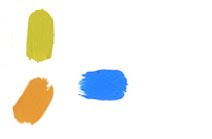
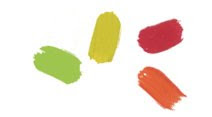
A small amount of blue that leans towards violet will make a large expanse of a pale cool yellow sing. But if it were a blue I wanted to enhance, I would use a bit of red or a muted orange. Yellow wouldn’t do it. Juxtaposing a green with an orange is hard to do well but Elsworth Kelly has perfected that combination in several paintings. Richard Diebenkorn was a master of using a variety of blues together. Howard Hodgkin puts colors together in what might seem an outlandish fashion, doesn’t do anything like what I describe here, and produces an amazingly lush, rich and satisfying color experience. Vincent Van Gogh made marvelous use of orange in his sunflower paintings. He did pretty well with any color he wielded.

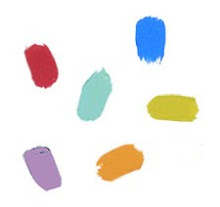
How did they make those choices? One theory that comes to me is that the brain wants color to be complete, the spectrum all there though only part of it is visible. Some colors contain other colors: violet contains blue and red, for example. You know how if you stare at an area of red for a while and then close your eyes, you will see green? That sums up to red + yellow + blue which contain violet, orange and green = complete color.  Of course following rules or making formulas won’t work, though they might be helpful. It is the eye that knows. And whatever the part of the brain that exclaims “Yes! That’s it!”. Or “No, absolutely not!” It either looks right; it is complete and alive and radiant, or it fails. Try again.

Sometimes the choice is about the mood of the work (or the worker). It can change from cheerful to somber with the addition or subtraction of a hue or with a transparent glaze. Contrast can be heightened or diminished which might change the tenor of the piece. If there is line, texture, visible brush stroke, blended tones or distinct hard edges, these will all affect the effect.

I have no ability that I trust more than my sense of color but I don’t have a clue about how it really works. My brother and my son are color blind which means that I am a carrier. My therapist makes beautiful color photos and is color blind. Go figure.

The image above is Allegiance, acrylic & mixed media collage on canvas, 9 x 25", 2000. For information about any of the paintings seen on this site please email Joan.

Friday, January 15, 2010

About Rejection


This is a difficult topic to think and write about. It seems somehow more personal than other subject matter, rather something better not spoken of lest one be deemed rejection-able.

The first time I experienced it after becoming a full time dedicated painter happened some thirty years ago. I was crushed. I had answered the doorbell to find the UPS man returning to me several large paintings I had consigned some months prior to a San Diego gallery. There was a letter asking me to send others in their place as they had had no luck with these. I was too distraught and discouraged by the reappearance of works I expected to be readily embraced by an adoring public (well, maybe not exactly expected, more like hoped) to respond by sending new paintings for consignment — big mistake. I felt that I could not possibly send any work anywhere ever again. Yes, it was an overreaction and at some level I was aware of that. So I called a friend, the fabulous Jane Hill, multi-talented actress, playwright and all around arts person, who immediately came to my doorstep. She spent a generous amount of time telling me about auditions and of picking oneself up and going for it again.

I learned. It doesn’t hurt less or nor is it less disheartening. But the restorative thoughts come quickly now: about how Ernest Hemingway papered the room he worked in with rejection slips, how Van Gogh sold nothing during his lifetime, how Mozart was dropped into a pauper’s grave and Schubert acquired his first piano not long before his early death. I’m in good company, I tell myself. I remember my successes and consider how they outweigh the disappointments. I think of all the paintings I have sold over the years and try to recall some of the pats on the back. I will not let the rebuff be a measure of the quality of the work I do nor instill self-doubt. I am my own harshest critic and that will suffice. The painter Elmer Bischoff said: “Success begins and ends in the studio”.

Has it gotten easy? No, it has not. But it has become one of the acceptable attributes of a life worth living.

The image above is Mini Triptych Han, acrylic & mixed media collage, 4.5 x 3" each, 2005. For information about any of the paintings seen on this site please email Joan.

Friday, January 8, 2010

About Creativity


I often hear mention of an individual’s search for creativity, especially from people who are past middle age. It sounds as if it were something precious and elusive that needs to be ferreted out of some hidden place or fabricated and put to use. I’ve also heard: “I’m not very creative”. In point of fact human beings cannot help but be creative. Our creativity has produced our cultures, our cities, our artifacts and our arts.

Contrary to the theory that we become creative when our basic needs are covered, we have become expert at covering those needs. Necessity is the mother of invention, right? Human beings are resourceful and imaginative. We make things. We find solutions.

Here’s Abraham Maslow on the subject: “The key question isn't ‘What fosters creativity?’ But it is why in God's name isn't everyone creative? Where was the human potential lost? How was it crippled? I think therefore a good question might be not why do people create? But why do people not create or innovate? We have got to abandon that sense of amazement in the face of creativity, as if it were a miracle if anybody created anything.”

My experience and what I know of friends who are painters or writers is that it’s about work and focus. Add to that some faith in the worth of your project (not always available but very helpful) and maybe some need for the results. When is a work of art needed? Well, how about a commission or a deadline for a design or a show? Or how about a job where you have to supply copy for advertising, a plan for a structure, or the resolution of a conflict? Creativity is essential in business, economics, architecture, industrial design, graphic design, advertising, mathematics, music, science and engineering. It is also vital when you are in the midst of putting together a recipe and you find that you need to make a substitution for some ingredient. When I was teaching, I found that my students were wizards at creating excuses for not having done the assignments.

Maslow again: “We assume that creativeness consists of lightening striking you on the head in one glorious moment. The fact that people who create are good workers tends to be lost.” And from psychologist Teresa Amabile (slightly paraphrased): “Creativity soars when the artist, or mathematician or cook is concentrating on the task before her and on the intrinsic pleasure and satisfaction of the task.”

Simply put, it is the act of making something new.

The image above is the collage painting Lobelia, acrylic & mixed media on paper mounted on canvas, 23” x 29”, painted in 2006. For information about any of the paintings seen on this site please email Joan.

Friday, January 1, 2010

About the Pleasure Factor


I have discovered that the joy I feel when I am submerged in making a painting becomes somehow, mysteriously, visible. Is the enjoyment I feel in the process so obvious? What are the experiences and desires the viewer brings?

There are a great many qualities that can be present in a work of art. I will name some and mention some painters that come to mind. Drama: Francisco Goya, Pablo Picasso; Fine drawing: Rembrandt van Rijn, Jean Auguste Ingres; Luscious color: Richard Diebenkorn, Mark Rothko; Delicious use of paint: Sean Scully, Howard Hodgkins, Jasper Johns; Elegant design: Paul Klee, Elsworth Kelly, Piet Mondrian, Henri Matisse, Sol LeWitt; Pattern: Pierre Bonnard, Gustav Klimt.   There are also political statements and social commentary and, of course, sentimentality. Paintings can be intended to produce an emotional response in the viewer (only successful if the painter is feeling the emotion): Picasso’s Guernica, for example, otherwise just manipulative of the viewer. That’s the tip of the iceberg; there are more elements to be found in paintings and as many amalgamations of them as there are and have been painters.

Some of my own opinions and biases are: skill in painting is the least interesting of the ingredients in a work of art, necessary to a point but dangerous to the painter as it can become the reason for the painting. Good taste is the kiss of death. I want some kind of delight. Think JMW Turner, Claude Monet. The artists I mention are not necessarily the artists I have emulated and learned from. They are some of those that I admire and enjoy and am happy to see again and again.

Agnes Martin (very fine drawing) said: “The function of artwork is the stimulation of the sensibilities.” I guess our preferences have to do with which of our sensibilities we want to prod.

The image above is Fountain, acrylic & mixed media on paper mounted on canvas, 35” x 92”, painted in 1999. For information about any of the paintings seen on this site please email Joan.

Friday, December 25, 2009

About Rules


I have learned about painting by looking at paintings and I learned about painting at school.

But mostly I have learned about painting by painting. In order to make paintings that meet the need that provokes the output, I have to put aside most of the rules and learning that have come from outside of myself — except for the purely technical information. It is too easy to make a painting that looks like a painting and therefore is a painting. When I was at school, there was a lot of talk, when “critiquing” a painting in progress, about depth. Paintings had to manifest an illusion of three dimensions. We didn’t need that deceit when we were in the classroom of Two Dimensional Design, nor when we were learning calligraphy.

Space was an essential consideration in the architecture classroom and the sculpture lab, and definitely to be desired in a painting. I was halfway through my life (assuming I will last until eighty or ninety), when I realized that I hated that deception. I love the flatness of a canvas or a sheet of paper. I do not want to destroy it with a mirage. I want to consider the entire rectangle, (or square, don’t like circles or triangles or any other roundish or angular shapes for paintings), and keep every bit of it looking as flat as it is to start with. I was so accustomed to envisioning object and background, or foreground, middle ground and background, that I had to struggle to see differently and work differently. That struggle is behind me now; I see and paint what I consider realism: paint and/or other media on a flat surface, no illusion of depth intended. I have no quarrel with seeing space in other painters’ work, just don’t want it in mine.

At my last show, a number of people commented on the depth they saw in my paintings. Well, what do you do? Paintings are for the eye of the beholder. I am comfortable with whatever it is that viewers bring to my work and very often surprised and enlightened.

The image above is the Nostalgia Quartet, acrylic & mixed media collage on archival board, 19.5” x 14.5” each panel, painted in 2008. For information about any of the paintings seen on this site please email Joan.